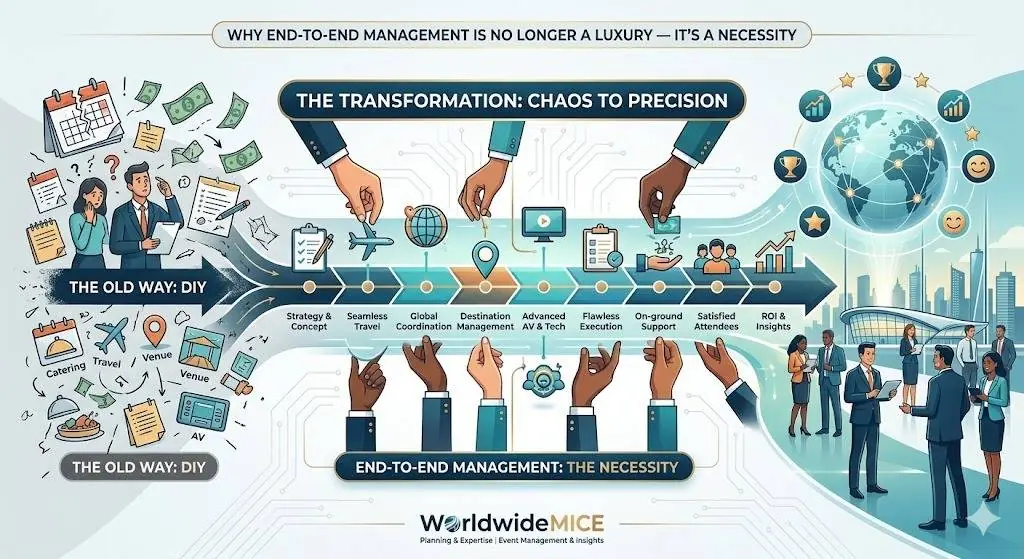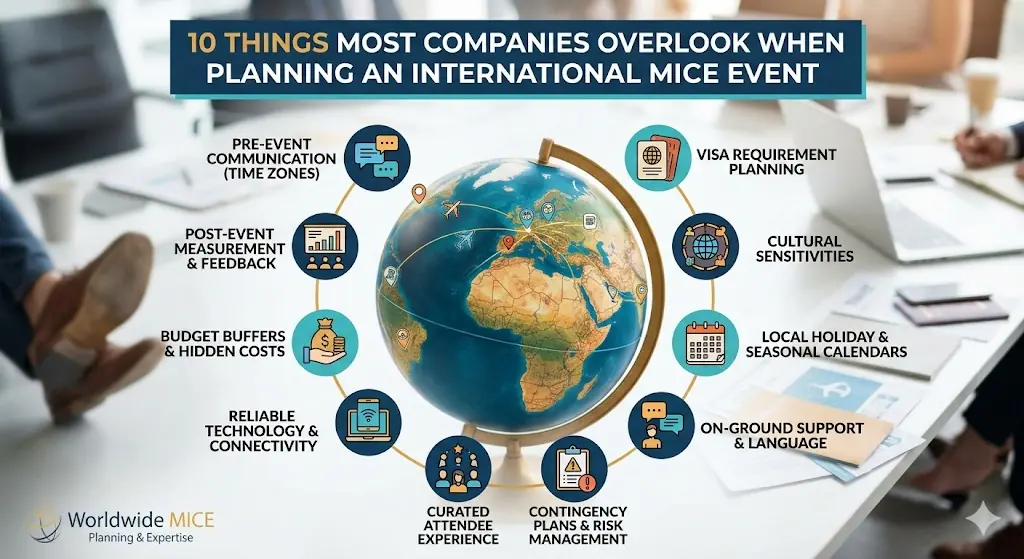
Planning an international MICE event is no small feat. Between coordinating travel, managing logistics, selecting venues, and keeping stakeholders happy, it is easy for even the most experienced teams to miss things that seem minor but can significantly impact the overall experience. Here are ten of the most commonly overlooked aspects — and why they matter more than most people realise.
1. Time Zone Differences in Pre-Event Planning
Most teams focus on the event itself but underestimate how much time zone differences affect the planning process. Coordinating with international vendors, venues, and local operators across different time zones can slow down decision-making, delay approvals, and create communication gaps. Building a clear communication schedule that accounts for time differences from day one saves considerable stress down the line.
2. Visa and Entry Requirements
It sounds obvious, but visa requirements are one of the most frequently underestimated aspects of international event planning. Different nationalities within the same group may have different visa requirements for the same destination. Processing times vary, requirements change, and last-minute complications can leave attendees stranded. Starting the visa process early and working with experts who know destination-specific requirements is non-negotiable.
3. Cultural Sensitivities and Local Etiquette
What works in one country may be inappropriate or even offensive in another. From dietary restrictions and dress codes to gifting customs and communication styles, cultural nuances play a significant role in how your event is perceived and experienced. Overlooking these details can unintentionally alienate attendees or create awkward situations that reflect poorly on your brand.
4. Local Public Holidays and Peak Seasons
Booking a venue or destination without checking the local calendar is a mistake that can prove costly. A local public holiday can mean closed attractions, limited vendor availability, inflated hotel rates, and heavy tourist crowds. Similarly, booking during peak season without accounting for its impact on pricing, availability, and overall experience can significantly affect your event's quality and budget.
5. On-Ground Communication and Language Barriers
Having a detailed plan on paper is one thing — executing it in a country where the primary language is not English is another. Language barriers can cause confusion with local vendors, transportation providers, and venue staff. Having a dedicated on-ground team or local partner who speaks the language and understands the destination is something many companies arrange too late or not at all.
6. Contingency Planning and Risk Management
Things go wrong. Flights get delayed. The weather turns. Vendors cancel. Yet a surprising number of companies go into international events without a proper contingency plan. Having clear backup options for key elements — venues, transportation, activities — and a crisis communication protocol can be the difference between a minor hiccup and a complete disaster.
7. Attendee Experience Beyond the Agenda
Companies often invest heavily in the conference or meeting itself, but give little thought to what attendees experience outside of it. The free time, the hotel, the meals, the transfers — these moments shape the overall perception of the event just as much as the sessions themselves. A thoughtfully curated attendee journey, from arrival to departure, is what separates a good event from an unforgettable one.
8. Technology and Connectivity
International venues do not always guarantee reliable Wi-Fi or AV infrastructure that meets your specific requirements. Many events have been derailed by poor internet connectivity, incompatible equipment, or technical setups that were not tested in advance. Always conduct a thorough technical assessment of your venue and have backup solutions ready — especially for hybrid or tech-heavy events.
9. Budget Buffers for Hidden Costs
International events almost always come with unexpected costs — local taxes, service charges, currency fluctuations, last-minute supplier changes, or destination-specific requirements that were not factored into the original budget. Most experienced planners recommend building a contingency buffer of at least 10-15% into every international event budget. Those who often find themselves making difficult compromises at the worst possible time.
10. Post-Event Follow-Up and Measurement
The event ends — and then what? Many companies treat the conclusion of an event as the finish line, when in reality, it is one of the most important moments to leverage. Gathering attendee feedback, measuring outcomes against original objectives, and capturing content and memories for internal or external use are all steps that get deprioritised in the post-event wind-down. A strong post-event strategy ensures that the impact of your investment extends well beyond the final day.
International MICE events are complex, multi-layered undertakings — and the details that get overlooked are often the ones that matter most to the people attending them.
At Worldwide MICE, we have spent over 20 years navigating every complexity of international event planning — so our clients never have to. Let's plan your next international event, the right way.